



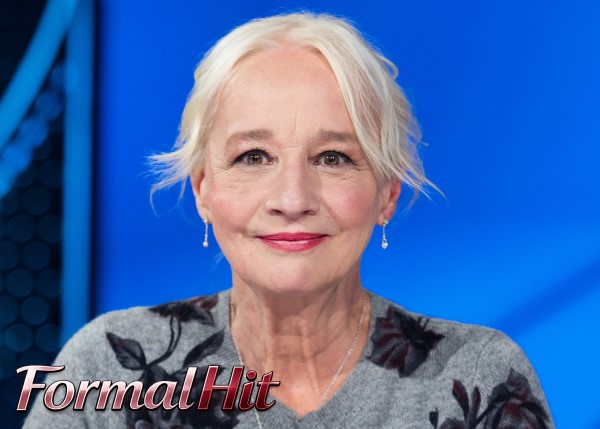
There are performers who work for applause, and then there are performers who work for truth. Diane Lavallée belongs unmistakably to the second group. For more than three decades, this remarkable Canadian Cinema Actress has delivered performances that feel less like acting and more like lived experience raw, grounded, and deeply human. Born on November 30, 1955, in Montreal, Quebec, she has become one of the most beloved and respected figures in the history of Quebec’s screen and stage culture. Her story, shaped equally by artistic brilliance and personal resilience, is one that deserves to be told in full.
Who Is Diane Lavallée? Age, Roots, and Early Training
As of 2026, Diane Lavallée is 70 years old and still working, still creating, and still commanding every room she walks into. She grew up in Montreal, a city that has always had a rich and fiercely proud cultural identity, especially within its French-speaking community. From an early age, Lavallée showed an unmistakable pull toward the performing arts, and her family supported the pursuit wholeheartedly. Though specific details about her parents remain largely private — a boundary she has always respected it is clear that her upbringing instilled in her both discipline and a deep love for storytelling.
Rather than rushing onto the stage, she chose to build her craft from the ground up. She studied interpretation and phonetics at the Conservatoire Lassalle and completed acting workshops at the Théâtre du Rideau Vert, one of Quebec’s most prestigious French-language theatre institutions. Beyond that, she trained in classical ballet for five full years at the École des Ballets Classiques and added three more years of ballet-jazz at the École de danse Louise Lapierre. That physical and emotional training gave her a rare quality a performer’s body and a philosopher’s presence and it shows in every role she takes on.
Diane Lavallée Family: Spouse, Children, and a Dynasty of Talent
A Marriage That Produced a Legacy
The Diane Lavallée family story is as compelling as any script she’s ever appeared in. For a significant period of her life, Lavallée was married to Marcel Leboeuf, a well-known and highly regarded Quebec actor in his own right recognized for memorable appearances in films like Bach et Bottine and Les Barbares de La Malbaie, as well as his work as a public speaker and television personality. Together, they created a household where artistic ambition was the norm, not the exception. Their separation came later in life, but the bond they share as co-parents has never wavered.
Laurence Leboeuf: A Daughter Who Carried the Torch
The most visible and celebrated product of the Diane Lavallée family is undoubtedly their daughter, Laurence Leboeuf, born December 13, 1985, in Montreal. Growing up with two working actors as parents, Laurence absorbed the craft naturally, and she has since built a career that stands entirely on its own terms. She won the Prix Jutra for Best Supporting Actress, received a Genie Award nomination, and earned recognition from the Canadian Screen Awards for her work in the acclaimed series 19-2. Most recently, she gained broad Canadian and international visibility through the hit medical drama Transplant. In a touching full-circle moment, Diane and Laurence shared the screen together — playing a mother-daughter duo in the comedy En tout cas making art out of real life in the most beautiful way. Today, Laurence is in a relationship with popular Quebec comedian Martin Matte, who has also become part of the extended Lavallée family circle.
Family Bonds Tested and Proven
When Diane faced her most serious health crisis in recent years, it was her family who rallied around her without hesitation. Marcel Leboeuf spoke publicly about his commitment to standing by her side, and Laurence made no secret of her closeness to her mother sharing rare personal photos that moved fans across Quebec. The strength of the Diane Lavallée family, even across the lines of a former marriage, says something profound about the values at the heart of this remarkable household.
Diane Lavallée Health: A Battle Fought and Won
The Diagnosis That Shook Quebec
In May 2024, news spread through Quebec’s entertainment community that Diane Lavallée had been diagnosed with breast cancer. At 68 years old, she was at a point in her career where she was busier than ever committed to theatre productions, television projects, and the ongoing momentum of decades of work. The diagnosis forced her to step away from a summer theatre production, Appelez-moi Stéphane, a decision that clearly wasn’t easy for someone who has always defined herself through her craft. In a measured, dignified communiqué, she stated that having undergone surgery and facing radiation therapy, it was impossible for her to continue with rehearsals or stage performances through the summer season. She asked for privacy, and Quebec respected that.
The Road Through Treatment
What followed was one of the most challenging stretches of Lavallée’s life. She underwent two surgeries the second necessitated by lymph nodes that had been affected followed by 15 sessions of radiation therapy. The treatment cycle was gruelling, and she stepped entirely out of the public eye to focus on healing. Her diane lavallée health journey during this period was quiet, private, and deeply personal. Yet even in the silence, the warmth from fans, colleagues, and her tightly knit family surrounded her.
Remission, Return, and Radiance
By November 2024, Diane Lavallée completed her treatments and the news that followed was nothing short of joyful. Speaking on the popular Quebec television program Sucré Salé in 2025, she described her recovery with characteristic frankness and good humour, noting that her hair had grown back in an unexpected colour and that she was feeling genuinely well. “Everything is cool,” she said, in the understated way that only someone who has genuinely fought hard can say it. Shortly after, she returned to the stage for Appelez-moi Stéphane and appeared glowing at public events, including the red carpet for the series Vitrerie Joyal in April 2026 — there to support her daughter Laurence’s partner, Martin Matte. Looking forward, she has a theatre production scheduled at La Licorne for November and December 2026 and a new film role in Détective numéro 1, where she plays a highly disciplined character a type, she noted with a laugh, that she doesn’t often get to portray. Diane Lavallée health story is ultimately one of courage, recovery, and a spectacular return.
Diane Lavallée Filmography, Career, and Awards
Building a Body of Work
The Diane Lavallée filmography spans nearly three decades of film and television and reads like a curated tour through the best of Quebec cinema. She first caught wide attention in the cult vampire comedy Karmina (1996) and returned for Karmina 2: L’enfer de Chabot (2001). From there, her film credits grew with impressive consistency Winter Stories (1999), Wedding Night (2001), 8:17 p.m. Darling Street (2003), Mambo Italiano (2003), The Five of Us (2004), and the celebrated hockey biopic The Rocket (Maurice Richard) in 2005. Each entry in the Diane Lavallée filmography demonstrated new range, new depth, and an actor unwilling to repeat herself.
The Role That Defined a Generation
Beyond film, Lavallée’s television career cemented her as a cultural institution. Her portrayal of Thérèse Paré in the legendary Quebec sitcom La Petite Vie — which aired from 1993 through 2023 made her a household name across the province. Thérèse became one of the most beloved characters in Quebec television history, and the warmth, comedic precision, and emotional honesty Lavallée brought to the role earned her multiple Prix Gémeaux nominations: Best Supporting Actress in 1995 and 1999, and a shared ensemble award in 2003 for Best Performance in Comedy.
The Passion of Augustine and the Prix Iris
In 2015, Lavallée delivered what many consider the finest performance of her career: Sister Lise in The Passion of Augustine (La Passion d’Augustine). Set against the backdrop of a Quebec convent school navigating the social upheaval of the 1960s, her portrayal was precise, spiritually layered, and quietly devastating. The performance earned her the Prix Iris for Best Supporting Actress at the 18th Quebec Cinema Awards in 2016 the highest recognition of her film career to date. She had previously received a Jutra Award nomination in the same category for The Rocket in 2006, so the 2016 win felt not just deserved but long overdue. More recently, she appeared as La mairesse in Ghost Town Anthology (2019) and as Angéline Sauvé in Our Sisters-in-Law (2024), maintaining the same standard of excellence across every decade of work.
What Diane Lavallée Represents for Canadian Cinema
Artistry Over Ambition
Diane Lavallée has never chased fame. Instead, she has let the quality of her work speak for itself and it has spoken loudly enough to reach every corner of Quebec and beyond. As a Canadian Cinema Actress, she represents something increasingly rare: a performer whose longevity is built entirely on craft, not on celebrity. She picks her roles carefully, commits to them fully, and delivers every time.
An Inspiration That Extends Beyond the Screen
Her courage in facing breast cancer publicly even while asking for privacy modelled something important for public figures everywhere. She didn’t perform her illness, but she didn’t hide from it either. Then she came back, stood under the lights, and reminded everyone exactly why Quebec fell in love with her in the first place. At 70, Diane Lavallée is not winding down. She is, by every measure, still at her peak.
Conclusion
Diane Lavallée’s life is a masterclass in staying true to what matters. Through decades of brilliant performances, a family built on love and artistic passion, and a health battle fought with grace and grit, she has shown Quebec and Canada what it truly means to be a performer of substance. Her career, her family, and her resilience all point to the same truth: some artists don’t just entertain. They endure.


