



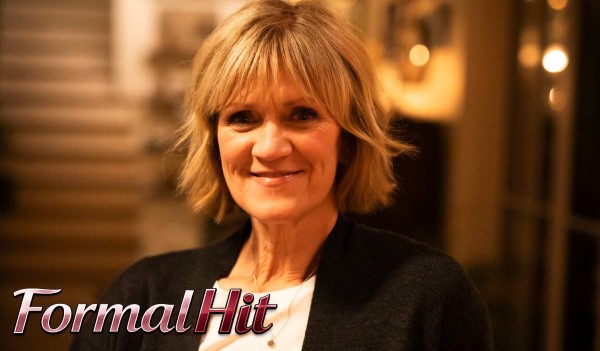
She never chased the spotlight in the way some performers do. Yet for more than three decades, Josée Deschênes has remained one of the most respected, consistently working, and genuinely beloved figures in Québec’s performing arts scene. From a small city in the Saguenay region to stages and screens across the province, her journey is one of true artistic dedication the kind that doesn’t burn bright and fast but instead deepens steadily, like a well-tended flame.
Who Is Josée Deschênes?
Early Life and Age
Josée Deschênes was born on August 9, 1961, in Jonquière, Québec a city that has since been amalgamated into the larger municipality of Saguenay. That makes her 64 years old as of 2025. Growing up in the heart of francophone Québec, Josée Deschênes developed a passion for the performing arts at a young age, and that passion never really left her. The culture, the language, the particular flavour of Québécois storytelling all of it shaped her deeply and continues to inform everything she does on stage and screen.
Her formal training came from one of Québec’s most prestigious institutions: the Conservatoire d’art dramatique de Québec, from which she graduated in 1986. That year turned out to be a pivotal one. Not only did she launch her professional career, but she also co-founded the Théâtre Niveau Parking in Québec City alongside her classmates a company that would go on to become a significant voice in the province’s independent theatre scene. Her roots, in other words, run deep, and they were planted intentionally.
Family Background and Personal Life
Josée Deschênes tends to keep her personal life relatively private, which is quite refreshing in an era where celebrity transparency has become almost mandatory. What is publicly known is that she has long been embedded in Québec’s artistic community, both professionally and personally. Her ties to the theatre world are not merely professional they are deeply social and communal. She built her career alongside collaborators who became lifelong colleagues, and that sense of community clearly sustains her.
Regarding her relationship status and children, Deschênes has not made these details a matter of public record in any formal or widely reported way. She has, over the years, spoken in interviews about her passion for theatre being the driving force in her life, suggesting an existence shaped primarily by her craft rather than defined by conventional biographical milestones. For an artist of her calibre and longevity, perhaps that makes complete sense.
A Career Built on Craft, Not Celebrity
Breaking Through: La Petite Vie and Beyond
Most Québécois of a certain generation know Josée Deschênes primarily through one iconic role: Creton, the dim-witted yet endearing daughter in the beloved television comedy La Petite Vie. The series ran from 1993 to 1998, and it was nothing short of a cultural phenomenon. At its peak, it drew over four million viewers an extraordinary number for a province of roughly seven million people at the time. Playing Creton gave Deschênes mainstream recognition, but the role never defined the full scope of what she could do. If anything, it demonstrated her ability to commit completely to a comic character while making her utterly human.
Beyond La Petite Vie, she built an impressive television filmography. She appeared in La part des anges (1998–2000), Mon meilleur ennemi (2001), Il était une fois dans le trouble (2004–2008), Annie et ses hommes (2002–2009), Tranches de vie (2009–2011), and 30 vies (2011). Since 2003, she also took on the recurring role of Élaine in L’Auberge du chien noir, a series that ran for years and earned a loyal following. More recently, she appeared in Audrey est revenue (2021) and took on a role in the acclaimed dramatic series Empathie, available on Crave, playing Diane Tétrault a reception worker in a psychiatric unit alongside Florence Longpré. Additionally, she joined the cast of the series Niagara (2024), further cementing her relevance in contemporary Québec television.
Film Achievements and Award Nominations
On the film side, Josée Deschênes has shown equal range. Her most celebrated cinematic performance came in Robert Lepage’s Le Polygraphe (1996), in which she played Judith. The performance earned her a nomination for Best Supporting Actress at the 17th Genie Awards a recognition that underscored her ability to hold her own in serious, prestige cinema. Over two decades later, she delivered another career-defining film performance in Denis Côté’s Ghost Town Anthology (Répertoire des villes disparues, 2019), earning a Prix Iris nomination for Best Actress at the 21st Québec Cinema Awards. Two major nominations from two very different eras of her career speaks volumes about her consistency and adaptability.
She has also appeared in The Seat of the Soul (Le siège de l’âme), Love and Magnets (Les Aimants), The Little Queen (La Petite Reine), and the 2024 release Niagara, with several additional film projects reportedly in development.
The Theatre: Her True Home
A Founding Voice in Québec’s Independent Scene
If television and film gave Josée Deschênes a public profile, theatre is where she has always lived most fully as an artist. As a co-founder of Théâtre Niveau Parking in 1986, she helped build a company that produced bold, collective theatre rooted in the Québec City arts community. Over the course of her career, she has appeared in more than seventy-five theatrical productions a staggering body of stage work that covers classical theatre, contemporary comedy, drama, and everything in between.
Notable Stage Roles
Some of her most praised stage work includes Carmen in Sainte-Carmen de la Main (1993), Thérèse in Fleur d’acier (2002), Madeleine 2 in Le vrai monde? (2007–2008), and Jocelyne in Bonne retraite, Jocelyne (2018–2019), the latter of which toured extensively following its premiere at Théâtre La Licorne. She also played Thérèse de Monsou in Le Père Noël est une ordure (2023–2024), performing alongside Élise Guilbault, Pierre Verville, and Sébastien Ricard.
In addition to acting, she has stretched further into the creative process. In 2017, she directed her first theatrical production, Ciao Papa!, at the Théâtre des Cascades. She has also co-written several collective works for Théâtre Niveau Parking, confirming her identity not just as a performer but as a genuine theatre-maker.
Recent Activities and What She’s Up to in 2025
Josée Deschênes shows absolutely no signs of slowing down. In 2025, she played Jeanne in Chers Parents at the prestigious Théâtre du Rideau Vert, a French comedy adapted into a Québécois context by Danièle Lorain. The production ran until June 1, 2025, and featured a strong ensemble cast. Also in 2025 and extending into 2026, she is appearing in Toc, Toc playing the role of Marie at the Théâtre Hector Charland and on a touring circuit across Québec. Between her television commitments with Empathie and her active stage schedule, she remains one of the most consistently present performers in the province’s cultural landscape.
Net Worth
Public figures in Québec’s francophone arts world rarely attract the kind of net worth scrutiny reserved for Hollywood stars, and Josée Deschênes is no exception. Precise figures are not publicly available, nor has she spoken openly about her finances. That said, given her decades-long, continuously active career across theatre, television, and film supplemented by directing, writing, and teaching credits industry observers reasonably estimate her net worth in the range of $1 million to $2 million CAD. It reflects a career built on steady, sustained work rather than the kind of blockbuster paydays that inflate celebrity fortunes. For an artist of her standing and longevity in Québec’s cultural ecosystem, that’s not just respectable it’s fitting.
Why Josée Deschênes Matters
There is something genuinely rare about a performer who, after nearly forty years, still commands leading roles on stage and meaningful parts on television. Josée Deschênes has never sacrificed depth for visibility. She built her career the old-fashioned way through training, collaboration, discipline, and an unswerving love for the craft. Whether she’s making four million Québécois laugh as Creton, breaking hearts in a Denis Côté film, or breathing life into a comedic stage role in her sixties, she brings the same fundamental quality: total presence.
In an industry that so often discards women past a certain age, Deschênes continues to work, to stretch, and to earn her place at the table on merit alone. For anyone interested in the richness of Québec’s performing arts culture, her career is, quite simply, essential.


