



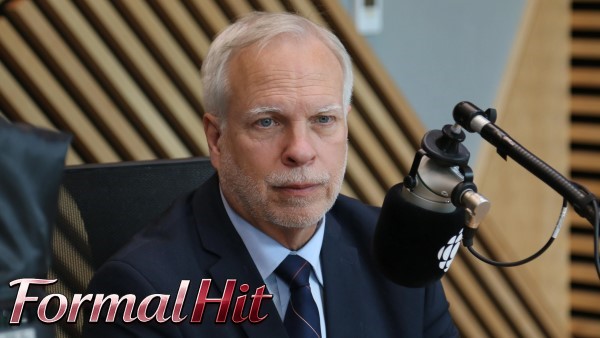
When the COVID-19 pandemic threw Quebec’s public health system into a state of near-constant crisis, the province needed someone steady, experienced, and credible enough to lead the charge. That person turned out to be Luc Boileau a physician, administrator, and public health strategist whose career had quietly been building toward exactly this kind of moment. Though he stepped into the spotlight somewhat unexpectedly in January 2022, his influence on Quebec’s health landscape stretches back decades.
From Emergency Medicine to Public Health Leadership
A Career Built on Depth, Not Speed
Dr. Luc Boileau didn’t take a shortcut to prominence. He trained as a physician at the Université de Sherbrooke, later earning a master’s degree in health administration from the Université de Montréal, and then added a fellowship from the Canadian Health Services Research Foundation to his credentials. That combination clinical grounding, administrative expertise, and research fluency made him a rare kind of leader in Quebec’s public health circles. He also built real-world emergency medicine experience early in his career, which gave him an understanding of frontline healthcare that purely administrative figures often lack.
Fifteen Years Shaping Montérégie’s Health System
Between 1993 and 2008, Boileau invested nearly fifteen years working within the Agence de la santé et des services sociaux de la Montérégie, one of Quebec’s largest regional health agencies. He worked his way from director of public health and planning to the role of CEO a trajectory that demonstrated both his technical depth and his capacity to lead large, complex organizations. Those years weren’t just about accumulating titles. They were formative, shaping his philosophy around community-based health planning, evidence-driven decisions, and collaborative governance.
Leading Quebec’s Premier Public Health Institutions
At the Helm of the INSPQ
In October 2008, Luc Boileau took on the role of president and CEO of the Institute national de santé publique du Québec (INSPQ), the province’s flagship public health research and advisory body. He remained in that post until January 2015 and during his tenure, he also took on the interim leadership of the Institute national d’excellence en santé et en services sociaux (INESSS) in 2014, essentially running both institutions simultaneously. That was a significant responsibility, tasked with examining how the two organizations could align their administrative and scientific functions for long-term sustainability.
A Decade at the INESSS
From 2015 onward, Boileau moved into the permanent CEO role at INESSS, where he oversaw health technology assessment, promoted evidence-based practices across the provincial healthcare system, and fostered cross-sector partnerships aimed at improving care quality and efficiency. He had been serving in that capacity and also functioning as an expert advisor to the government throughout the early phases of the pandemic when his world changed dramatically in January 2022. When Dr. Horacio Arruda stepped down as National Director of Public Health, Premier François Legault turned to Boileau as the most trusted and capable person available to fill that critical role.
Stepping Into the Storm: Quebec’s National Director of Public Health
An Unexpected Call at a Critical Moment
Nobody envies the person who takes over a leadership role in the middle of a crisis, especially a global health crisis with no clear ending in sight. But Dr. Luc Boileau accepted the interim appointment with evident composure. He acknowledged the weight of what Dr. Arruda had done before him, expressed genuine respect for his predecessor’s contributions, and then got to work. His first press conferences conveyed a calm, measured authority that the public and the media responded to well.
The Face of Quebec’s Ongoing COVID Response
Throughout 2022, Boileau became the consistent public face of Quebec’s pandemic briefings. Particularly as Premier Legault stepped back from daily COVID-19 press conferences ahead of the provincial election, it was Boileau who stood before reporters, answered difficult questions, and tried to translate complicated epidemiological data into language that ordinary Quebecers could understand and act on. He had a knack for accessible analogies at one point comparing mixed vaccine types to everyday food combinations, helping demystify the concept of heterologous vaccination for the broader public. That kind of communication instinct is not easy to teach, and it served him well throughout his tenure.
Confirmed in the Role
In June 2022, the Quebec government formally confirmed Boileau as National Director of Public Health and deputy minister, ending his interim status. Health Minister Christian Dubé cited his expertise, experience, and leadership during the pandemic as the clear reasons for the permanent appointment. It was a validation not just of his pandemic performance, but of everything he had built over the course of his career.
Policy Priorities and Public Health Vision
Vaccination, Mental Health, and Equity
Under Dr Luc Boileau Quebec‘s leadership, the province pushed forward on several fronts simultaneously. Vaccination campaigns not only for COVID-19 but also for influenza, with combined shots encouraged to maximize uptake became a central priority. He also championed a broader vision for public health that included strengthening mental health services, addressing systemic health inequities particularly within marginalized communities, and integrating data and digital tools more effectively into public health planning. These weren’t simply reactive measures. They reflected a coherent philosophy of resilience-building for a system that had been caught underprepared when COVID-19 first arrived.
Honest Reflection on Pandemic Preparedness
In February 2025, looking back five years after the start of the pandemic, Luc Boileau was candid about what had gone wrong. He acknowledged that Quebec had entered the crisis underprepared a statement that required intellectual honesty and a willingness to engage in the kind of frank post-mortem analysis that public institutions don’t always welcome. That willingness to reflect openly, rather than spin the historical record, is a mark of genuine leadership. It also signals a commitment to learning, which is ultimately what good public health governance depends on.
Controversy and the Human Side of Public Leadership
A Viral Moment and a Swift Apology
In August 2025, just weeks before his departure from the director’s role was announced, Luc Boileau found himself at the centre of an unwanted media storm. A video circulated online showing him exchanging insults with an electric scooter rider on a Montreal street. The clip spread quickly, and the reaction was predictably harsh. Boileau apologized promptly and without hedging, acknowledging that the exchange had been undignified. The incident was a reminder that public figures are human capable of frustration and poor moments and that how someone responds to their worst moments often says more about them than the moments themselves. His swift accountability largely contained the damage.
A Legacy That Transcends the Noise
Controversies come and go, but they rarely define careers built on sustained, serious work. In the case of Dr. Luc Boileau, the body of work spanning more than three decades of meaningful contributions to Quebec’s health system is what endures. His ability to foster evidence-based decision-making culture across major provincial institutions, his steady hand during an unprecedented health crisis, and his candid assessment of what Quebec got wrong all point to a leader who prioritized substance over optics.
The End of an Era and What Comes Next
Passing the Torch to Dr. Caroline Quach-Thanh
In September 2025, Quebec announced that Dr. Caroline Quach-Thanh a microbiologist, infectious disease specialist, and well-known public health voice would take over from Boileau as National Director of Public Health, with her term beginning on September 29th. Health Minister Christian Dubé praised Boileau’s leadership and service in the official statement, closing a chapter that had been defined by pandemic crisis management and the slow, unglamorous work of building institutional resilience. It was a respectful and appropriate send-off for someone who had given the role everything it required.
What His Career Teaches Us About Public Health Leadership
The story of Luc Boileau is ultimately a story about what it means to lead public institutions responsibly over the long term. It’s not about charisma or political skill though both help. It’s about building expertise methodically, accepting difficult assignments when called upon, communicating honestly with the public even when the news is hard, and being willing to hold a mirror up to your own institution’s failures. Those qualities are rarer than they should be in public life, and they matter enormously when a province or a country faces a crisis it didn’t see coming.
Quebec’s public health system is stronger today, in meaningful ways, because of the work Luc Boileau put into it. That’s a legacy worth understanding, and worth remembering.


