



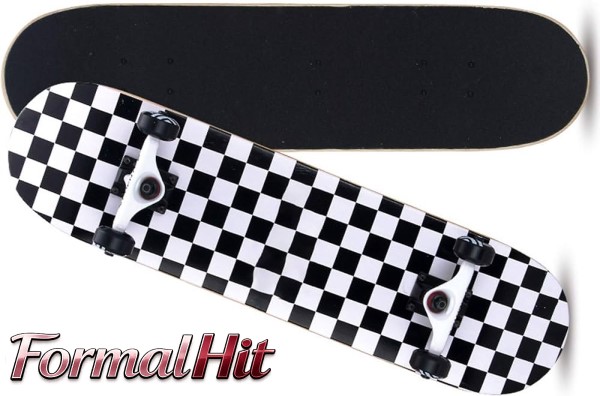
Walking into a skate shop for the first time can feel overwhelming. Rows of decks, wheels in every colour imaginable, and staff throwing around terms like “trucks” and “kingpin” as if you should already know what they mean.
This guide breaks down everything you actually need to know about skateboards from picking your first setup to understanding how electric skateboards differ from the classic kind. Whether you’re buying for yourself or your kid, you’ll walk away knowing exactly what to look for.
What Makes Up a Skateboard?
A skateboard looks simple, but it’s actually a handful of parts working together. Each piece affects how the board rides, so it’s worth understanding what you’re actually buying.
- Deck — the wooden platform you stand on, usually made from seven-ply maple
- Trucks — the metal T-shaped pieces that connect the wheels to the deck and allow turning
- Wheels — usually polyurethane, ranging from soft and grippy to hard and fast
- Bearings — small rings inside the wheels that let them spin smoothly
- Grip tape — the sandpaper-like layer on top of the deck for traction
Buying a pre-built complete skateboard is the easiest route for beginners, since all these parts are already matched to work together. More experienced riders often build custom setups, mixing and matching parts based on their riding style.
Types of Skateboards and Which One Fits You
Not every skateboard is built for the same purpose, and this is where a lot of new riders get confused. Picking the wrong type can make learning far harder than it needs to be.
| Type | Best For | Deck Shape | Notes |
|---|---|---|---|
| Standard (popsicle) | Street skating, tricks, parks | Symmetrical, double kick | Most common type, good all-rounder |
| Cruiser | Commuting, casual rides | Shorter, often with a kicktail | Smooth ride over rough pavement |
| Longboard | Long-distance travel, downhill | Long, flexible | Stable at higher speeds |
| Old-school | Pool skating, cruising | Single kick, wider nose | Popular with retro riders |
| Electric skateboard | Commuting, motorized riding | Varies, usually reinforced | Motor and remote control included |
If you’re brand new and mainly want to learn tricks or skate at a local park, a standard skateboard is the right call. If you’re more interested in getting from point A to point B comfortably, a cruiser or longboard suits that goal better.
How Do I Know What Size Skateboard to Buy?
Deck width matters more than length for most riders. Shoe size is a decent starting point smaller feet (under size 8) generally suit a deck around 7.5 to 8 inches wide, while larger shoe sizes are more comfortable on decks 8 inches and up.
Kids’ skateboards typically run smaller across the board, both in width and overall length, to match smaller hands and feet. Buying a size too large can make balance genuinely harder to develop early on.
Electric Skateboard vs. Traditional Skateboard
An electric skateboard swaps leg power for a battery-driven motor, controlled by a handheld remote. It’s a completely different riding experience, and it’s worth understanding the trade-offs before deciding which suits you.
Traditional skateboards offer:
- Full manual control and trick capability
- Lower cost, typically $50–200 for a complete setup
- No charging required, ready whenever you are
- A genuine skill-building learning curve
Electric skateboards offer:
- Motorized speed, often 20–40 km/h depending on the model
- Range typically between 15–40 km per charge
- Higher cost, generally $400–2,000+
- Best suited to commuting rather than trick riding
Electric skateboards aren’t a replacement for learning to ride they’re a different category entirely, closer to a compact personal transporter than a trick deck. If your goal is learning ollies and kickflips, a traditional board is the only real option.
Are Electric Skateboards Legal to Ride on Roads?
This varies significantly by province and municipality in Canada, so it’s worth checking local bylaws before riding one on public roads. Some cities treat them like bicycles, while others restrict them to private property or specific paths.
The Right Shoes for Skateboarders
Shoes matter more than most beginners expect. Regular sneakers wear out fast on grip tape and offer little protection against the impact of landing tricks.
Good shoes for skateboarders typically share a few features:
- Flat, wide soles for better board feel and stability
- Reinforced ollie areas (usually around the outer edge) to resist wear from flick tricks
- Vulcanized or cupsole construction — vulcanized soles offer more board feel, cupsoles offer more cushioning
- Durable stitching around high-friction zones like the toe and side panels
Brands like Vans, Etnies, and DC have built entire product lines around skateboarding specifically, and it shows in the durability. A pair built for skating will simply last longer under the same abuse than a general athletic shoe.
Quick tip: Rotate between two pairs if you skate frequently. It lets the foam cushioning recover between sessions and roughly doubles the lifespan of both pairs.
Common Beginner Mistakes to Avoid
Most new riders make the same few mistakes early on, and knowing them ahead of time can save weeks of frustration.
- Skipping proper stance setup — figure out if you’re regular or goofy footed before practicing, since fighting your natural stance slows progress
- Buying a board that’s too small or too large — this makes balance unnecessarily difficult
- Ignoring bearings and wheel maintenance — dirty bearings make a board feel sluggish and unresponsive
- Learning tricks before mastering balance — rolling, stopping, and turning confidently should come first
- Skating without protective gear — wrist guards and a helmet prevent the injuries most likely to end a beginner’s momentum early
How Much Does a Skateboard Cost?
Pricing varies widely depending on quality and type, and it helps to know where your money is actually going.
- Entry-level complete boards: $50–90, fine for casual or occasional riders
- Mid-range decks (bought separately with quality trucks/wheels): $150–250
- Pro-level custom setups: $200–350, built from individually chosen components
- Electric skateboards: $400 and up, scaling significantly with battery range and motor power
Cheaper boards from big-box stores often use lower-quality wood and hardware, which can affect both performance and durability. Spending slightly more on a shop-assembled setup usually pays off in ride quality and lifespan.
Maintaining Your Skateboard
A little maintenance goes a long way toward keeping a board rideable for years rather than months.
- Clean bearings every few months with bearing cleaner or isopropyl alcohol
- Rotate wheels periodically to even out wear
- Replace grip tape once it loses traction or gets excessively worn
- Check trucks regularly for looseness, since a wobbly board is both frustrating and unsafe
- Store boards away from direct sunlight and moisture, both of which warp decks over time
Frequently Asked Questions About Skateboards
How long does it take to learn to skateboard? Basic balance and rolling comfortably usually takes a few weeks of regular practice. Trick riding takes considerably longer and depends heavily on consistency.
What’s the difference between a skateboard and a longboard? Skateboards are shorter and built for tricks and park riding, while longboards are longer, more stable, and designed for cruising or downhill riding rather than technical tricks.
Do I need special shoes to start skateboarding? Not strictly, but shoes for skateboarders last significantly longer and offer better board feel than regular sneakers. It’s a worthwhile investment once you’re riding regularly.
Are electric skateboards good for beginners? They’re better suited to people who already want a commuting option rather than absolute beginners learning to balance. Traditional boards remain the better starting point for learning core skills.
Final Thoughts
Skateboards come in more varieties than most first-time buyers expect, and picking the right type makes a real difference in how quickly you progress. Whether you go with a classic setup, a longboard for cruising, or an electric skateboard for commuting, matching the board to your actual goals is what matters most.
Ready to get rolling? Head to a local skate shop, test a few deck widths in person, and ask about complete setups suited to your riding style and shoe size.


