



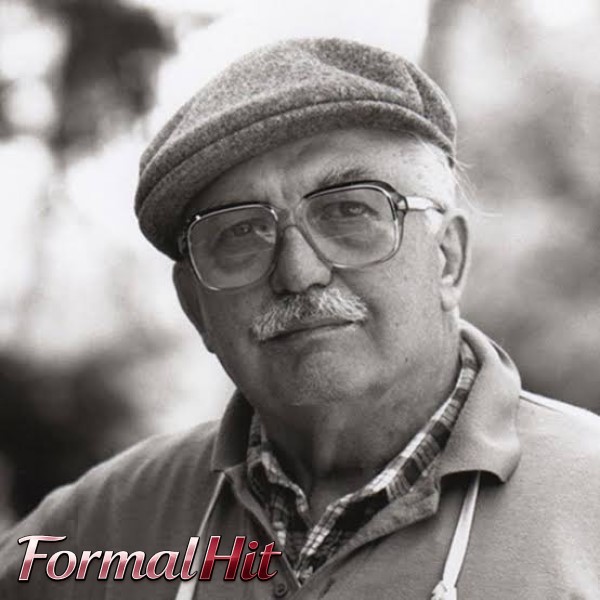
Few artists have captured the spirit of northern Canada quite like Ted Harrison did. His bold colours, simplified shapes, and unmistakable skies turned the Yukon into something instantly recognizable to millions of Canadians who never set foot there. This article covers Ted Harrison’s life, his signature style, the story behind Ted Harrison art, and why his paintings still matter to collectors and schoolkids alike.
Who Was Ted Harrison?
Edward Hardy Harrison, known to the world as Ted Harrison, was born on August 28, 1926, in Wingate, County Durham, England, and died on January 16, 2015, at the age of 88 in Victoria, British Columbia. Between those two dates, Ted Harrison built a career that made him one of the most recognized painters in Canadian history.
Ted Harrison was a British-Canadian painter best known for his colourful landscape paintings of the Yukon. He didn’t arrive in Canada as a trained “northern” artist his path there was slower, shaped first by war, teaching, and years of travel before the Yukon ever entered the picture.
Ted Harrison’s Early Life and Education
Ted attributed his early interest in art to encouragement from his parents, particularly his mother, who had a background in fashion design and photography. Grammar school teachers recognized his talent early and pushed him toward formal art training, which led him to enrol at Hartlepool College of Art in 1943, though the Second World War soon interrupted his studies.
Harrison eventually completed his education, earning a National Diploma in Design from the college in 1949. He went on to earn a teaching certificate from the University of Durham and a Bachelor of Education from the University of Alberta, which set him on a teaching career that lasted almost three decades. He also served with the British army during the 1940s and taught school in various countries before eventually making his way to Canada.
From Teacher to Full-Time Artist
Harrison’s career took a decisive turn when he relocated from England to northern Canada in 1967. He began residing in the Yukon in 1968 and remained there until 1993, a period that shaped nearly everything he’s known for today.
During his schoolteacher days in Carcross, Yukon, in late 1968, his work underwent a dramatic transformation. He simplified his forms almost to a childlike degree and introduced sweeping rhythms and lush colours. That shift is the moment Ted Harrison art as we know it truly began.
What Makes Ted Harrison Paintings So Distinctive
Ted Harrison paintings are unmistakable once you’ve seen a few. His trademark works often depict faceless people, accompanied by the odd dog or raven, standing in front of sunken houses, set against colourful lakes, brilliant skies, and mountains that seem to blend into one another.
His works are known for their almost psychedelic colour palettes, where the sun and mountains are treated with a kind of mystical reverence. One of his best-known paintings, “Alone in the Great North,” featuring a purple sun setting against an orange sky, captures that style perfectly.
His subject matter stayed close to the classic fixtures of Yukon life ravens in flight, foxes against snowy backdrops, dog teams and mushers on the trail, the Old Log Church in Whitehorse, and “The Duchess,” a vintage train engine in Carcross. These recurring images became a visual language that Canadians came to associate directly with Ted Harrison.
Common Elements Found in Ted Harrison Artwork
Collectors and fans often point to a handful of consistent traits across his catalogue:
- Bold, non-naturalistic colour choices for skies, mountains, and water
- Simplified, near-abstract figures without detailed facial features
- Recurring northern wildlife, especially ravens, foxes, and sled dogs
- Sweeping, curved compositions rather than sharp geometric lines
- A strong sense of warmth and joy, even in stark winter scenes
Early on, that approach didn’t win over everyone. Many critics initially dismissed his work as naïve and childlike, though those same critics would later struggle to afford an original Ted Harrison painting.
Career Milestones and Recognition
Ted Harrison’s rise from a schoolteacher in Carcross to a nationally celebrated artist didn’t happen overnight, but the honours piled up steadily once his style caught on.
| Year | Achievement |
|---|---|
| 1969 | First exhibit held at the Whitehorse Public Library |
| 1980 | Published children’s book “The Last Horizon” |
| 1986 | Illustrated edition of “The Cremation of Sam McGee” |
| 1986 | Designed the Yukon Pavilion for Expo 86 in Vancouver |
| 1987 | Received the Order of Canada |
| 1991 | Honorary doctorate from Athabasca University |
| 1996 | Designed a Canada Post Christmas stamp |
| 1998 | Honorary doctorate in Fine Arts from the University of Victoria |
| 2005 | Inducted into the Royal Conservatory of the Arts |
Ted Harrison also became the first Canadian artist-illustrator shown at the International Children’s Book Exhibition in Bologna, Italy, and at the Otani Memorial Museum of Art in Nishinomiya, Japan. The National Film Board of Canada even produced a feature film about him titled “Harrison’s Yukon.”
Beyond painting, Ted Harrison built a parallel career as a children’s author and illustrator. His book “Children of the Yukon” brought him international acclaim, and he followed it with illustrated editions of Robert Service’s classic poems, including “The Cremation of Sam McGee” and “The Shooting of Dan McGrew.” For many Canadian kids, those illustrated poems were their very first introduction to Ted Harrison art in the classroom.
Life After the Yukon
The Harrisons moved to Victoria, British Columbia, in 1993, largely in search of better health care for his wife Nicky’s advancing Alzheimer’s disease. They were homesick for the Yukon at first, but Ted eventually came to love Victoria after discovering the whales and fishing along the west coast.
Even after leaving the north, Harrison stayed connected to community life. He volunteered for years as an artist in the schools at Monterey Elementary and remained a regular feature of the Moss Street Paint-In event. In 2009, author Katherine Gibson published the first full biography of the artist, titled “Ted Harrison: Painting Paradise.”
A Mentor to Other Artists
Ted Harrison’s influence extended well past his own canvases. Artist Jim Logan credited Harrison with encouraging him early in his career, recalling that Harrison bought one of his first pieces and consistently attended his exhibitions, always speaking positively even when Logan’s early work was still rough. That generosity became part of his legacy just as much as his paintings did.
Where to See Ted Harrison Art Today
Ted Harrison paintings can be found in private and public collections across Canada, as well as in New Zealand, Japan, Germany, and the United States. Several commercial galleries continue to represent his estate and sell original works and prints, including Loch Gallery, Madrona Gallery, and Hambleton Galleries.
Interestingly, despite his enormous popularity, Canada’s National Gallery did not own any of his work as of the mid-2010s — a gap that surprised many admirers given how closely his imagery is tied to Canadian identity.
Frequently Asked Questions About Ted Harrison
When did Ted Harrison die? Ted Harrison died on January 16, 2015, at the age of 88, in Victoria, British Columbia.
Where was Ted Harrison born? He was born in Wingate, County Durham, England, on August 28, 1926.
What is Ted Harrison best known for? Ted Harrison is best known for his brightly coloured Yukon landscape paintings, along with his illustrated editions of Robert Service’s poems and his children’s books.
How long did Ted Harrison live in the Yukon? He lived in the Yukon from 1968 to 1993, a period of 25 years that shaped nearly all of his most famous work.
Did Ted Harrison receive any major honours? Yes. He received the Order of Canada in 1987 and multiple honorary doctorates, including from Athabasca University, the University of Victoria, and the University of Alberta.
Final Thoughts
Ted Harrison turned a quiet teaching post in Carcross into a lifelong artistic mission, and in doing so, gave Canada some of its most instantly recognizable imagery. From illustrated storybooks to gallery walls across four continents, Ted Harrison art continues to introduce new generations to the colour and spirit of the Yukon. Decades after his death, Ted Harrison paintings still show up in classrooms, Canada Post stamps, and private collections, proof that his vision of the north never really faded.
If you’re curious to see Ted Harrison artwork in person, check listings at galleries like Loch Gallery or Madrona Gallery, or look into the Yukon’s own public collections there’s no better way to understand why so many Canadians still call his work unmistakably theirs.


