

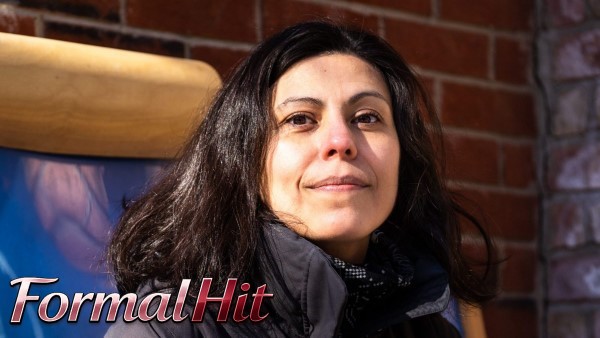
There is a particular kind of courage in turning your own pain into literature that other people can actually live inside. Caroline Dawson had that courage in abundance. A Chilean-born writer, sociologist, and beloved professor who made Montréal her home, she spent her life building bridges between languages, between cultures, between the person she arrived as and the writer she became. Her story is one that Canada needed, and still needs, to hear.
Who Was Caroline Dawson?
Caroline Dawson was born on December 12, 1979, in Valparaíso, Chile. In 1986, she was exiled to Montréal, Québec, with her family as refugees fleeing the dictatorship of Augusto Pinochet. She was seven years old. She didn’t speak French. She didn’t know anyone. And yet, from that impossible beginning, she built a life and a literary voice that would eventually shake the foundations of Québec literature.
Her family arrived in Toronto on Christmas Day 1986 before settling in Montréal. Caroline Dawson age at the time of her arrival was just seven young enough to still believe in Santa Claus, but old enough to feel the full weight of displacement. That contradiction childhood innocence pressed up against the brutal realities of exile runs through everything she ever wrote.
From Refugee to Professor
She studied sociology, travelled the world, and lived in Sweden for several years before becoming a teacher at Cégep Édouard-Montpetit. That restlessness was never just wanderlust. It was someone trying to understand where she fit, not just geographically, but culturally, linguistically, and politically. The sociology degree gave her a framework. The teaching gave her purpose.
She taught for 15 years in Longueuil, Québec, at CEGEP Édouard-Montpetit, and also published a collection of poetry, Ce qui est tu, and the children’s book Partir de loin. Her students knew her as someone who genuinely cared not in a performative way, but in the way that changes how a young person sees themselves. She had a particular attentiveness toward those on the margins, perhaps because she had stood there herself.
Caroline Dawson Career: Writing That Refused to Look Away
Caroline Dawson career as a writer grew naturally out of her academic life, but it was never dry or theoretical. Her writing was alive, urgent, and deeply personal. She co-organized the Montréal Youth Literature Festival, wrote for literary blogs, and became increasingly recognized as a voice that Québec literature hadn’t quite heard before bilingual in experience, rooted in the working-class immigrant experience, and unflinching in its honesty.
Là où je me terre — The Book That Changed Everything
In 2020, Dawson published her debut novel Là où je me terre (published in English as As the Andes Disappeared). The opening line alone announced a writer of rare nerve: “I was seven years old the first time I decided not to kill myself.” It doesn’t ease you in. It pulls you straight into a childhood shaped by political violence, uprooting, poverty, and the grinding work of belonging somewhere new.
The largely autobiographical work recounts the story of an immigrant child who left Chile under a dictatorship and came of age in Montréal. The narrator concludes the first chapter by stating she decided to survive the despair of leaving her home by “embracing existence even if it means having to transform it.” That impulse to transform rather than simply endure is probably the most honest description of Caroline Dawson career you’ll find anywhere.
The novel won the 2022 Prix littéraire des Collégiens and was nominated for the 2021 Prix des libraires du Québec. The English translation, published in 2023, was subsequently shortlisted for the 2024 Amazon.ca First Novel Award. That kind of recognition across both official languages says something important: this was not a niche story. It was a universal one.
Poetry and Children’s Literature
Her 2023 poetry collection Ce qui est tu roughly translated as “What Goes Unspoken” expanded her range while staying true to her themes of silence, identity, and the things immigrants learn to swallow in order to be accepted. Then, in early 2024, she published Partir de loin, a children’s book illustrated by Maurèen Poignonec. It was published in February by éditions de la Bagnole. The fact that she spent her final months writing for children giving young readers a gentler entry point into the story of displacement — says everything about her priorities as a writer and as a human being.
Caroline Dawson Family: Roots, Siblings, and the Life She Built
The Family That Crossed an Ocean
Caroline Dawson family was the gravitational centre of her life and her art. She fled Chile with her family as political refugees from the Pinochet dictatorship. Her parents worked tirelessly to build something new in Québec cleaning banks at night, navigating a foreign language, holding the family together through sheer will. Those early years of watching her parents labour in silence, sacrificing their own comfort and dignity for their children’s future, are rendered with extraordinary tenderness in her novel.
Nicholas Dawson: A Literary Sibling
She was the sister of writer Nicholas Dawson. The fact that two siblings from the same refugee family both became celebrated Québec writers is remarkable and speaks to a household where storytelling, language, and intellectual curiosity were clearly nurtured, even in the most difficult circumstances. Their parallel literary careers form one of the more quietly compelling threads in contemporary Québec letters.
Caroline Dawson Relationship and Her Own Children
Caroline Dawson relationship with her partner and the family they built together was a consistent undercurrent in how she spoke publicly about her life. Dawson leaves her parents, her brothers Nicholas and Jim, her partner, and their children. She was not someone who kept her personal life entirely separate from her public identity her writing drew too heavily from lived experience for that kind of distance. But she was also protective. Her relationship and her children were hers, held close, while her professional and literary life was given freely to the world.
Caroline Dawson kids appear implicitly throughout the themes of her final works the children’s book Partir de loin in particular carries the quiet weight of a parent who wants her children to understand where they come from, and why leaving a homeland is never simple. It reads like a gift, written with full awareness of what was coming.
The Weight of Illness — and the Work That Continued Anyway
Ms. Dawson was diagnosed with cancer in 2021. She was open about her condition in interviews with journalists and on social media. That openness was characteristic. She didn’t retreat. Instead, she continued teaching, writing, and showing up producing a poetry collection and a children’s book after her diagnosis, finishing work that she knew she might not live to promote.
She had been suffering from bone cancer for several years before her death on May 19. She was 44 years old. The grief in the Québec literary community was immediate and genuine. These were not polite eulogies. People were devastated, because they had understood, even while she was alive, that they were witnessing something rare.
A Legacy That Keeps Growing
The most telling measure of Caroline Dawson’s impact is what happened in the days immediately after her death. In May 2024, just a few days before Dawson’s death, the French division of the Canadian Broadcasting Corporation announced the creation of the Prix Caroline-Dawson, a literary award to honour works by emerging writers. An award named in your honour, announced before you’ve even passed that’s not a consolation prize. That’s recognition.
Dawson’s friend and colleague Valérie Blanc established the Caroline Dawson Memorial Fund at Cégep Édouard-Montpetit. The annual scholarship will be offered to a first-generation immigrant student. That detail matters enormously. The scholarship doesn’t go to the most academically decorated student, or the most talented writer. It goes to a first-generation immigrant someone who, like Caroline, arrived carrying everything and nothing at once. It’s the most fitting tribute imaginable.
Her sociological training and her literary instincts were never at odds with each other, and that’s ultimately why her work endures. Ms. Blanc says Ms. Dawson’s training in sociology informed her work as a novelist depicting the inequities experienced by immigrants and women. She didn’t just tell her own story. She gave language to an experience that millions of Canadians carry quietly, without ever quite finding the words.
Why Caroline Dawson Still Matters
Quebec literature has always had a complicated relationship with questions of identity who belongs, who writes in French, whose story gets told. Caroline Dawson walked into that conversation without asking permission. She wrote in French about a childhood lived in Spanish, about becoming Québécoise while remaining Chilean, about the version of Canada that doesn’t make it onto tourism posters. And she did it with such craft, such warmth, and such rigorous honesty that people couldn’t look away.
Caroline Dawson age at death was 44. She published her debut novel at 40, after decades of teaching, living, grieving, and growing into her own voice. That timeline alone should comfort anyone who thinks they’ve missed their moment. She hadn’t. Neither have you.
She arrived in Canada with nothing but her family and her survival instinct. She left behind novels, poems, students, scholarships, a literary prize, and a generation of immigrant writers who finally see themselves in the literature of their adopted country. That is a life fully, beautifully lived.
