



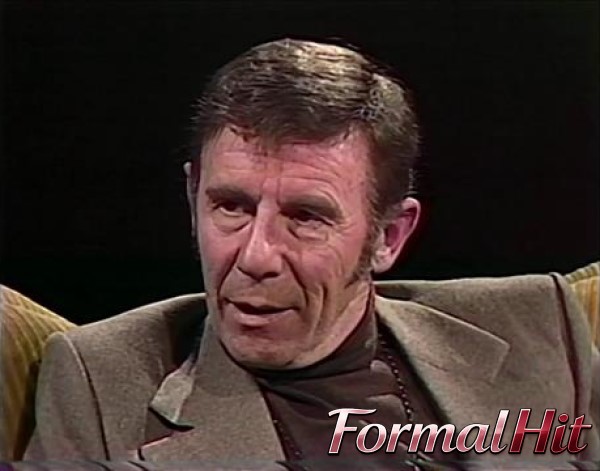
Few figures in Quebec’s cultural history managed to wear as many hats as Doris Lussier did. He was a professor, a political activist, a writer, and above all, one of the province’s most cherished comedic actors. Anyone researching Doris Lussier today is usually trying to piece together the same puzzle: who was this man, why did his character Père Gédéon become a household name, and what exactly did he appear in over his long career? This article answers those questions directly, using verified biographical details and a full look at Doris Lussier movies and tv shows.
Who Was Doris Lussier?
Doris Lussier was born on July 15, 1918, in Fontainebleau, in Quebec’s Estrie region. He lost his father at just four years old, which meant he largely educated himself before eventually becoming a professor at Université Laval, where he taught from 1946 to 1954. During this period, he also served as personal secretary to Georges-Henri Lévesque, the priest who founded the university’s faculty of social sciences.
That academic background might surprise people who only know Doris Lussier as a comedic performer. But it explains a lot about his later work. He wasn’t just a funny face on television; he was a sharp, educated man who understood Quebec society well enough to satirize it convincingly.
Doris Lussier died on October 28, 1993, in Montreal, at the age of 75. He’s buried in the cemetery of Fontainebleau, the same small community where he was born, close to family members including his grandfather and his son Jean.
The Political Side of Doris Lussier
Beyond acting, Doris Lussier was deeply involved in Quebec’s sovereignty movement. He was a close friend of René Lévesque and actively supported the Parti Québécois throughout the 1970s and 1980s. In fact, Lussier had the honour of introducing René Lévesque to the crowd during the party’s first electoral victory in 1976, a moment that speaks to how trusted and respected he was within that political circle.
He even ran for office himself at one point, representing the sovereigntist cause in the Matapédia riding, though he didn’t win the seat. That didn’t stop him from continuing to advocate for Quebec independence for the rest of his life. It’s worth noting that decades earlier, in 1940, Lussier had taken a controversial stance in support of Marshal Pétain and the Vichy regime, a position that put him at odds with Cardinal Villeneuve at the time. This is a less-discussed chapter of his life, but it’s part of the historical record.
The Birth of Père Gédéon
If you ask anyone in Quebec over the age of 50 about Doris Lussier, they’ll almost certainly mention Père Gédéon before anything else. This character, an old-fashioned, folksy farmer type, became Lussier’s signature role and turned him into a genuine celebrity.
Père Gédéon first captured public attention through radio and television game shows, most notably as the host of “Point d’interrogation” from 1956 to 1959. The character’s down-to-earth humour and distinctly Québécois voice resonated with audiences because it felt authentic rather than performed.
The success didn’t stop there. Doris Lussier later brought the character to “Le Petit monde du Père Gédéon,” a series built entirely around this persona, and he also hosted the widely popular game show “La Poule aux oeufs d’or,” followed by “Bon après-midi.” By 1971, he revived Père Gédéon once again for “Le Ranch à Willie” on Télé-Métropole, proving the character had genuine staying power across different decades and formats.
He also wrote a book about his most famous creation, titled “Le père Gédéon, son histoire et ses histoires,” which gave fans a deeper look into the character’s origins and the stories behind him.
Doris Lussier Movies and TV Shows: A Career Overview
For anyone specifically searching for Doris Lussier movies and tv shows, here’s a clearer breakdown of his most notable screen credits.
Film Roles
- Les mains nettes (1958) – One of his earliest and best-known film roles, where he played M. de Varennes.
- Big Red (1962) – An English-language Disney production in which Lussier appeared as Farmer Mariot, showing his range extended beyond French-language Quebec productions.
Television Roles
- Grandville, P.Q. (1956) – An early television credit that helped establish him in the medium.
- Cordélia (1980) – Lussier played Juge Blanchet in this television production.
- Scoop II (1993) – One of his final roles, playing a bishop (Évêque) in this series, appearing in one episode.
- Montréal rétro (1992) – A production where he appeared as himself, reflecting his status as a cultural fixture rather than just an actor.
- Les Plouffes – The television adaptation that helped bring the Père Gédéon character to an even wider audience, cementing his place in Quebec’s television history.
A Quick Reference Table
| Title | Year | Role | Type |
|---|---|---|---|
| Les mains nettes | 1958 | M. de Varennes | Film |
| Grandville, P.Q. | 1956 | — | TV |
| Big Red | 1962 | Farmer Mariot | Film |
| Cordélia | 1980 | Juge Blanchet | TV |
| Montréal rétro | 1992 | Himself | TV |
| Scoop II | 1993 | Évêque | TV |
This mix of Doris Lussier movies and tv shows shows a performer who moved comfortably between comedy, drama, and even self-referential appearances late in his career, when he’d become something closer to a Quebec institution than a working actor auditioning for parts.
Why Doris Lussier Still Matters in Quebec Culture
It’s worth asking why Doris Lussier remains a name people search for more than three decades after his death. Part of the answer is nostalgia. Older generations grew up with Père Gédéon on their television screens, and that kind of cultural imprint doesn’t fade quickly.
But there’s more to it than nostalgia alone. Doris Lussier represented a particular era in Quebec history, the Quiet Revolution and its aftermath, when the province was redefining its identity, its politics, and its relationship with the rest of Canada. He was present at some of the pivotal moments of that transformation, not just as an entertainer but as an engaged citizen.
His combination of comedic talent and genuine intellectual credibility (a former university professor, remember) made him a unique voice. He could make people laugh with Père Gédéon’s rural charm one moment and speak seriously about sovereignty the next.
Frequently Asked Questions About Doris Lussier
What is Doris Lussier best known for? He’s best known for creating and playing Père Gédéon, a folksy character who appeared across multiple Quebec radio and television productions from the 1950s through the 1970s.
Was Doris Lussier a real professor? Yes. Before his acting career took off, Doris Lussier taught at Université Laval from 1946 to 1954 and served as secretary to Georges-Henri Lévesque, founder of the university’s social sciences faculty.
Did Doris Lussier appear in English-language productions? Yes, he appeared in the 1962 Disney film “Big Red,” playing Farmer Mariot, one of his few credits in an English-language production.
How did Doris Lussier die? Doris Lussier died on October 28, 1993, in Montreal, Quebec, at the age of 75.
Was Doris Lussier involved in politics? Very much so. He was a committed Quebec sovereigntist, a close friend of René Lévesque, and he ran for office representing the Parti Québécois in the Matapédia riding.
Final Thoughts
Doris Lussier’s story is really the story of Quebec itself across much of the 20th century: rural roots, self-made education, cultural pride, and political awakening, all wrapped up in one man who happened to be extraordinarily funny on top of it all. Whether you came across his name through old television reruns, a genealogy search, or simple curiosity about Quebec’s cultural icons, his career deserves more than a passing mention.
If you’re curious to explore further, seek out clips of Père Gédéon online or look into archival footage from “Les Plouffes” and “La Poule aux oeufs d’or.” These pieces of Doris Lussier movies and tv shows history offer a genuine window into a performer, and a period in Quebec history, that continues to resonate today.


