

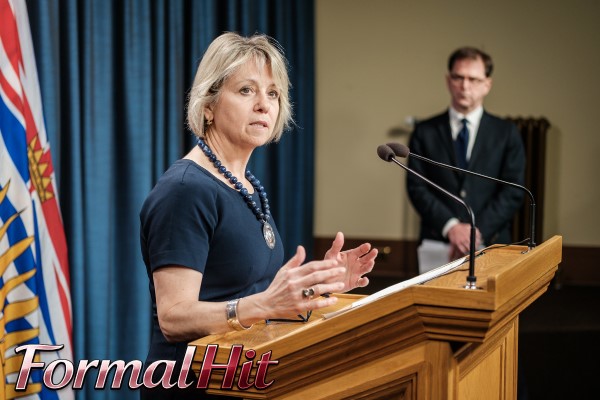
When Canadians think of calm, evidence-based leadership during one of the most turbulent periods in modern history, one name comes up again and again Dr. Bonnie Henry. British Columbia’s Provincial Health Officer didn’t just manage a pandemic. She redefined what public health leadership looks like in this country, and in doing so, earned the respect of millions of people who hung on her every word during the darkest days of COVID-19. But who exactly is Dr. Bonnie Henry, and how did she get here?
Early Life and Education: Roots That Shaped a Public Health Giant
Dr. Bonnie Henry was born in Fredericton, New Brunswick, and grew up in Charlottetown, Prince Edward Island, the second-oldest of four daughters. Her father served as a major in the Canadian Army, which meant the family relocated frequently from Calgary to St. John’s to the Netherlands giving young Bonnie an early appreciation for adaptability and community. That restless, curious spirit never left her.
Building a Foundation in Science and Medicine
In 1986, she earned a Bachelor of Science (Honours) from Mount Allison University in Sackville, New Brunswick. She then enrolled at Dalhousie University’s Faculty of Medicine in Halifax, graduating with her MD in 1990. Rather than stepping straight into a clinical practice, she made a decision that would set her apart from most physicians of her generation she joined the Royal Canadian Navy.
A Decade at Sea
Serving as a medical officer at CFB Esquimalt in Victoria, British Columbia, Dr. Henry spent nearly a decade in the Navy. It was there, she has said, that she first began to think in public health terms. One of her earliest interventions pushing to ban smoking aboard ships made her briefly unpopular among the sailors, but it planted a seed. She was already thinking about population health, not just individual patients.
After completing her military service, she pursued a Master of Public Health at San Diego State University and completed residency training in preventive medicine at the University of California, San Diego, followed by a residency in community medicine at the University of Toronto. By this point, her career trajectory was unmistakably clear.
A Career Built on Crisis Response
If there’s a theme running through Dr. Bonnie Henry’s professional life, it’s this: she shows up when things get hard. Her career reads like a roll call of the world’s most challenging public health emergencies, and she was on the front lines of nearly all of them.
Polio, Ebola, and the Making of a Global Health Leader
In 2000, Dr. Henry travelled to Pakistan to work with the WHO and UNICEF on their polio eradication program. The following year, she moved to Uganda to support the World Health Organization’s response to an Ebola outbreak. These weren’t desk jobs or advisory roles they were hands-on, field-level work in regions where the stakes couldn’t be higher. That kind of experience shapes a person in ways that no textbook can replicate.
SARS in Toronto: The Crisis That Defined Her Domestic Role
In September 2001, Dr. Henry joined Toronto Public Health as an Associate Medical Officer of Health. Two years later, in 2003, she became the operational lead for Toronto’s response to the SARS outbreak one of the most significant public health crises Canada had ever faced. She sat on the Ontario SARS Scientific Advisory Committee and helped shape the response that ultimately brought the outbreak under control. That experience proved invaluable. When COVID-19 arrived nearly two decades later, she already knew how to move fast without causing panic.
Rising Through BC’s Public Health System
After her time in Toronto, Dr. Henry returned to British Columbia in 2005, joining the BC Centre for Disease Control as a physician epidemiologist. Over the following years, she steadily rose through the province’s public health infrastructure, taking on roles that broadened her reach and deepened her expertise.
Appointment as Provincial Health Officer
In February 2018, Dr. Henry was appointed as BC’s Provincial Health Officer the first woman ever to hold the role. She replaced Dr. Perry Kendall, who praised her judgment and her instinct for people-centred leadership. As the province’s most senior public health official, she became responsible for monitoring the health of every British Columbian and leading the government’s disease prevention and health protection efforts.
She also continued teaching, maintaining her position as an associate professor at the University of British Columbia’s Faculty of Medicine and School of Population and Public Health, a role she has held since 2010.
Dr. Bonnie Henry and COVID-19: A Leader for the Ages
When the pandemic hit in early 2020, Dr. Bonnie Henry became something rare in Canadian public life a bureaucrat that people genuinely trusted. Her daily press briefings were models of clarity. She presented data honestly, acknowledged uncertainty when it existed, and never talked down to the public. Her recurring phrase “Be kind, be calm, and be safe” became a national touchstone.
Recognition from Around the World
In June 2020, the New York Times featured her in a piece titled “The Top Doctor Who Aced the Coronavirus Test,” calling her approach one of the most effective pandemic responses in the world. That kind of international recognition doesn’t come easily, and Dr. Henry received it not through bombast or politics, but through consistent, principled leadership rooted in science.
She also faced criticism at various points for not mandating masks sooner, for the province’s back-to-school plans in the fall of 2020, and for some communication gaps around COVID data. To her credit, she engaged with that criticism and continued to adapt. No pandemic response is perfect, and the ability to course-correct under pressure is itself a form of leadership.
Writing About the Experience
In February 2021, Dr. Henry co-authored Be Kind, Be Calm, Be Safe: Four Weeks that Shaped a Pandemic with her sister Lynn Henry. The book captures the critical early weeks of BC’s COVID response and offers an intimate look at the decisions that defined the province’s approach. It became a bestseller and gave Canadians an unfiltered window into the weight of that responsibility.
Awards, Honours, and Recognition
The honours have come steadily and are well-deserved. In 2021, she was made a Member of the Order of British Columbia. The following year, she received the Order of British Columbia and the British Columbia Medal of Good Citizenship. She has also collected numerous honorary degrees from universities across the country.
The Order of Canada — 2025
Most recently and significantly, in June 2025, Dr. Henry was appointed as an Officer of the Order of Canada one of the country’s highest civilian honours. Governor General Mary Simon announced the appointment alongside 82 other recipients, and Dr. Henry’s response was characteristically humble. “Having my name amongst this group of incredible Canadians is truly humbling,” she said. “To be recognized by my country for my life’s work in health and public health is a tremendous honour.”
The Canadian Public Health Association also honoured her in April 2025 with the R.D. Defries Award the organization’s highest distinction along with Honorary Life Membership, recognizing her transformative contributions to public health at the provincial, national, and international levels.
Dr. Bonnie Henry Net Worth and Compensation
Many Canadians are naturally curious about the financial side of public service. When it comes to Dr. Bonnie Henry net worth, no verified public figure exists, as is the case for most provincial government officials in BC. However, as Provincial Health Officer, she earns an estimated annual salary in the range of $200,000 to $500,000, which reflects the seniority and scope of her role. Her income is further supplemented by her academic position at UBC and book royalties. For a career built on public service rather than private sector gain, that financial picture is appropriate and consistent with someone who has clearly never been motivated by money.
Her Published Work and Public Voice
Dr. Henry is the author of Soap and Water & Common Sense: The Definitive Guide to Viruses, Bacteria, Parasites and Disease, first published in 2009 and updated in 2020 to address COVID-19. It remains one of the most accessible and practical public health books written by a Canadian physician. Through her writing, she has consistently worked to close the gap between scientific expertise and everyday understanding a contribution that extends well beyond her official duties.
What Makes Dr. Bonnie Henry Different
In a world that often rewards volume over substance and celebrity over competence, Dr. Bonnie Henry stands out precisely because she has never chased the spotlight. She spent years in unglamorous, high-pressure roles on navy ships, in Ugandan villages, in Toronto’s SARS command centres before anyone outside public health circles knew her name. That depth of experience is what made her effective when the cameras finally turned her way.
She combines scientific rigour with genuine compassion, institutional authority with personal humility. Whether you agreed with every decision she made during the pandemic or not, it’s hard to argue with the fundamental decency and seriousness with which she approached her work.
Conclusion: A Legacy Written in Public Health
Dr. Bonnie Henry’s story isn’t finished she remains British Columbia’s Provincial Health Officer and continues to shape public health policy on issues ranging from infectious disease to the ongoing drug overdose crisis. Her career arc, from a military medical officer banning smoking on ships to an Officer of the Order of Canada, is a testament to what sustained, principled public service can look like.
Discussions around Dr. Bonnie Henry net worth may satisfy a certain curiosity, but the real measure of her value to this country isn’t financial. It’s the lives protected, the panic averted, and the quiet, steady voice that told millions of Canadians to be kind, be calm, and be safe at a moment when they needed to hear it most.
