



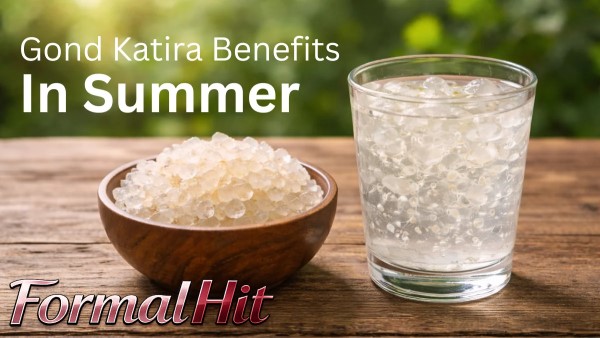
If you’ve walked through a South Asian grocery store in summer, you’ve probably spotted small, pale, irregular flakes sold in plastic packets labelled Gond Katira. It doesn’t look like much on the shelf, but soak it in water overnight and it transforms into a translucent, jelly-like substance that’s been used in Ayurvedic and Unani households for generations. Gond Katira has a long history as a cooling ingredient, and interest in it has been picking up again as people search for natural alternatives to sugary summer drinks.
This guide explains what Gond Katira actually is, what it’s called in English, how people traditionally use it, and what to watch out for before you try it yourself.
What Is Gond Katira?
Gond Katira is the dried resinous exudate of Astragalus gummifer and related Astragalus species, thorny shrubs native to the mountainous regions of Iran, Turkey, and parts of western Asia. Producers harvest it by tapping the plant’s roots or stems, similar to how maple syrup is collected, and the sap dries quickly into pale, ribbon-like or flake-like pieces.
Once soaked, the flakes swell dramatically and take on a soft, gel-like texture. In water, it forms a gel-like substance that can be worked into a paste, which is why it’s so often mixed into drinks, desserts, and even skincare recipes rather than eaten on its own.
Gond Katira in English
This is one of the most common questions people have, and the answer is simple: Gond Katira in English is called Tragacanth Gum. The name tragacanth comes from Greek, where “tragos” means goat and “akantha” means thorn a nod to the thorny shrub it comes from. You may also see it labelled as gum tragacanth, Persian gum, or occasionally Shiraz gum on packaging, since Iran is the largest producer of tragacanth gum in the world.
Knowing this English name matters if you’re shopping outside a South Asian or Middle Eastern grocer, since Western health food stores and pharmacies almost never use the Hindi or Urdu name on their labels.
Gond Katira vs. Gond: What’s the Difference?
People often confuse Gond Katira with plain Gond, and while they sound similar, they’re not the same ingredient.
| Feature | Gond Katira (Tragacanth Gum) | Gond (Gum Arabic) |
|---|---|---|
| Source plant | Astragalus shrub | Acacia tree |
| Texture when soaked | Jelly-like, cooling gel | Softens but doesn’t gel the same way |
| Common season of use | Summer | Often used year-round, especially in winter sweets like panjiri |
| Typical use | Cooling drinks, desserts, skincare | Binding agent in laddoos and other sweets |
Gond, also known as acacia gum, is derived from the sap of the Acacia tree and is commonly used in traditional Indian sweets as a binding and thickening agent, while Gond Katira is used almost entirely for its cooling, gel-forming properties. If a recipe calls specifically for one, it’s worth resisting the urge to swap in the other, since the textures behave quite differently.
Traditional Uses of Gond Katira
Gond Katira shows up across food, wellness, and even industrial applications, which is part of why it has stuck around for so long.
As a Summer Cooling Drink
Gond katira is widely used for its cooling properties, and in summer it’s mixed with water and consumed to help keep body temperature down. It’s traditionally soaked overnight, then blended into milk, rose water, or sherbet with a bit of sugar and sometimes basil seeds (sabja) for a cooling summer beverage.
In Ayurvedic and Unani Practice
Therapeutically, it’s used as a demulcent, bulk laxative, prebiotic substrate, and topical wound-healing agent in Ayurvedic and Unani practice. Traditional practitioners have long valued it for supporting digestion and soothing the gut, largely because of its high fibre and gel-forming content.
In Skincare and Hair Care
Some households use the soaked gel directly on skin, treating it as a natural, hydrating base for homemade face packs. It’s sometimes worked into face packs or hair masks for natural care, though these uses are rooted in tradition rather than clinical study.
As a Food and Industrial Additive
Outside the kitchen, tragacanth gum has a surprisingly wide industrial footprint. It functions as an emulsifier, thickener, stabilizer, and texturizer, and shows up in drinks, sauces, salad dressings, and ice cream, as well as in sugar craft paste for cake decorating. Its tasteless, odourless nature is exactly why manufacturers like it. it changes texture without changing flavour.
How to Use Gond Katira at Home
If you want to try it yourself, the process is simple but does require some planning ahead.
- Soak it overnight. Soak 1–2 teaspoons of Gond Katira in water overnight in a bowl with plenty of room, since it expands considerably.
- Check the texture. By morning, it should look translucent and jelly-like, not gritty or hard. If pieces haven’t softened, give it more soaking time rather than eating it as-is.
- Blend it in. Stir the gel into cold milk, lemon water, or a fruit-based drink. It has a neutral taste, so it takes on the flavour of whatever it’s mixed with.
- Start small. Because of its gel-forming, high-fibre nature, it’s wise to introduce it gradually rather than making a large glass your first try.
Side Effects and Precautions
Gond Katira has a long track record of traditional use, but that doesn’t mean it’s risk-free for everyone, and a few precautions are worth taking seriously.
- Drink enough water. Because the gum absorbs liquid and swells, it’s important to consume sufficient water alongside it to prevent choking or blockage in the intestine.
- Watch for allergic reactions. People should check for sensitivity to natural gums, since reactions can sometimes cause breathing difficulty.
- Moderate the amount. Traditional sources consistently caution against overuse, recommending small quantities rather than large servings, especially for children or anyone with a sensitive digestive system.
- Talk to a doctor if you’re pregnant, nursing, or on medication. Its laxative and cooling properties may interact with certain conditions or medications, so it’s worth a quick conversation with a healthcare provider before adding it to a daily routine.
None of these traditional uses have been evaluated the way a modern pharmaceutical would be, so it’s best to treat Gond Katira as a food-based wellness ingredient rather than a treatment for any specific medical condition.
Frequently Asked Questions
What is Gond Katira called in English? Tragacanth Gum, sometimes also labelled Persian gum or Shiraz gum.
Is Gond Katira the same as chia seeds? No. Chia seeds also form a gel in water, but they come from a completely different plant and have a different nutritional profile, including omega-3 fats that Gond Katira doesn’t contain.
Can Gond Katira help with heat exhaustion? It’s traditionally used to help manage body temperature in hot weather, but it isn’t a substitute for proper hydration or medical care if someone is showing signs of heat exhaustion or heat stroke.
Where can I buy Gond Katira in Canada? Most South Asian grocery stores carry it, often near other Ayurvedic ingredients, and it’s increasingly available through online spice and herb retailers as well.
Final Thoughts
Gond Katira is one of those ingredients that quietly does a lot without asking for much attention a cooling summer drink, a digestive aid, a natural thickener, all from one unassuming plant gum. Whether you know it by its Hindi name or by its English name, Tragacanth Gum, it’s worth understanding both the traditional uses and the practical precautions before you bring it into your kitchen.
If you’re curious, start small: soak a teaspoon overnight, stir it into something cold, and see how it fits into your own routine before making it a summer staple.


