

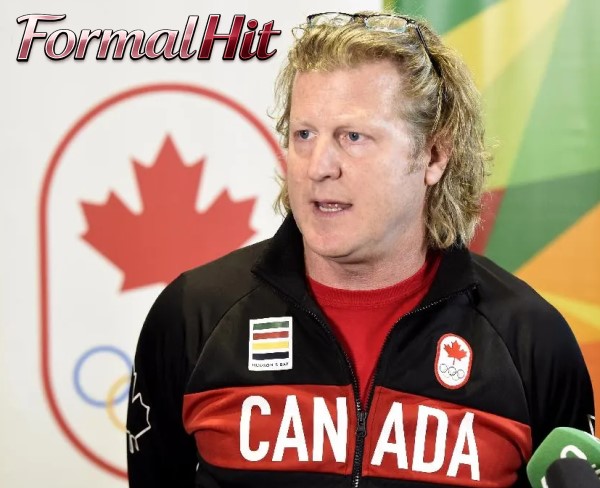
A Speed That Never Left Him Behind
There’s something almost poetic about the way Curt Harnett carried himself whether he was hunched over a track bike doing 70 kilometres an hour or standing behind a podium as a TV commentator, his presence always commanded the room. For decades, Canadians have watched him with a kind of quiet admiration, knowing they were in the company of someone genuinely exceptional. And honestly, that reputation has only grown with time.
Born on September 26, 1965, in Thunder Bay, Ontario, Curt Harnett is currently 58 years old. He grew up in a country that didn’t exactly have a deep tradition in sprint cycling, yet he went on to become one of the most decorated cyclists in Canadian history. That’s not a small feat. That’s a life built on discipline, grit, and a rare physical gift that he never took for granted.
Physique Built for Speed
If you’ve ever seen Curt Harnett in his prime, you’d understand immediately why track sprinting suited him so perfectly. He stood at approximately 6 feet tall and competed at a muscular build that was purpose-built for explosive, short-distance power. Sprint cyclists don’t look like marathon runners they look more like sprinters on two wheels, and Harnett was no different. His thighs were legendary, his upper body balanced, and his aerodynamic tuck on the bike was refined over years of obsessive training. Even now, well into his late 50s, he carries himself with the composed physicality of someone who never truly left that lifestyle behind.
Family, Love, and the Woman Behind the Champion
Ask anyone in Canadian sport about Curt Harnett wife, and you’ll quickly learn that he’s been in a committed, loving relationship with his partner through the most demanding periods of his athletic and broadcasting career. Harnett has kept his personal life relatively private a choice that speaks well of him but it’s well known that family has always grounded him. He and his wife have navigated the unpredictable tides of elite sport, international travel, and life after competition together. He hasn’t publicly paraded his relationship for media attention, and that restraint has earned him a great deal of respect from fans who admire authenticity over spectacle.
In terms of children, Harnett has spoken warmly in interviews about the importance of family and raising kids who understand what real dedication looks like. He’s been a quiet but steady family man, and those who know him personally describe him as someone who never lost sight of what matters most once the races were over.
A Career That Rewrote Canadian Cycling History
Let’s talk about what Curt Harnett actually achieved on the track, because the résumé is genuinely breathtaking. He competed in four consecutive Olympic Games Los Angeles 1984, Seoul 1988, Barcelona 1992, and Atlanta 1996 a run of consistency that very few athletes in any discipline ever manage. More impressively, he climbed the podium at three of those Games, earning a bronze medal in Los Angeles, a silver in Barcelona, and another bronze in Atlanta. That kind of sustained excellence across twelve years speaks to a mental and physical fortitude that goes far beyond raw talent.
World Championships and Global Recognition
Beyond the Olympics, Curt Harnett collected multiple World Championship medals, establishing himself as a global force in track cycling at a time when Canada was hardly a powerhouse in the sport. He also set a world record in the flying 200-metre time trial, which remains one of the defining moments in the history of Canadian cycling. Furthermore, the International Olympic Committee recognized his broader contributions to sport and athlete representation, inviting him to sit on the IOC Athletes’ Commission after his competitive years. That’s the kind of recognition that tells you a person is respected not just for winning, but for who they are and what they stand for.
Curt Harnett Today Life After the Velodrome
So what is Curt Harnett today? The answer is: still very much relevant, still very much engaged. After hanging up his racing shoes following Atlanta 1996, he transitioned into broadcasting with the kind of natural ease that made it look like he’d been doing it his whole life. He became one of the most recognizable voices in Canadian sports television, working extensively with CBC and TSN as a cycling commentator and sports analyst. His insight is always grounded, specific, and free of the empty filler you get from pundits who’ve never actually competed at the highest level.
Beyond commentary, Harnett has remained an active ambassador for cycling and sport in Canada. He’s been involved in advocacy work, athlete development, and public speaking, using his platform to push for better support systems for the next generation of Canadian athletes. He’s the type of figure who could easily coast on his medals, but instead he keeps showing up, keeps contributing, and keeps pushing.
Curt Harnett Net Worth A Career Well-Managed
When people search for Curt Harnett net worth, they’re usually curious about how a decorated Olympian and long-time broadcaster has fared financially. While exact figures are not publicly disclosed and Harnett himself has never made money a talking point estimates in Canadian sports circles generally place his net worth somewhere in the range of $1 million to $3 million CAD. This reflects decades of professional broadcasting work, endorsement relationships during his cycling peak, speaking engagements, and smart personal financial management.
It’s worth noting that Harnett built this financial position not through flash or corporate excess, but through sustained professional output and a reputation that made him consistently hireable long after his medals stopped being freshly polished. That’s a career model a lot of young athletes would do well to study.
Legacy, Influence, and What He Means to Canada
There’s a version of the Curt Harnett story that could easily become a feel-good sports cliché small-town Canadian kid makes good on the world stage. But the real story is more layered and more interesting than that. He built something durable, something that outlasted his competitive years, and something that continues to shape how Canada thinks about track cycling, athlete advocacy, and the responsibilities that come with sporting success.
Curt Harnett didn’t just win races. He represented a philosophy that you can compete with ferocity and still behave with class, that you can chase records and still mentor others, and that you can leave your sport better than you found it. Canadians watching the Olympics today, seeing young cyclists compete on world-class tracks, are in some small but meaningful way watching the downstream effects of what Harnett helped build.
He remains, quite simply, one of the finest athletes this country has ever produced and the full story of Curt Harnett is still being written.
