



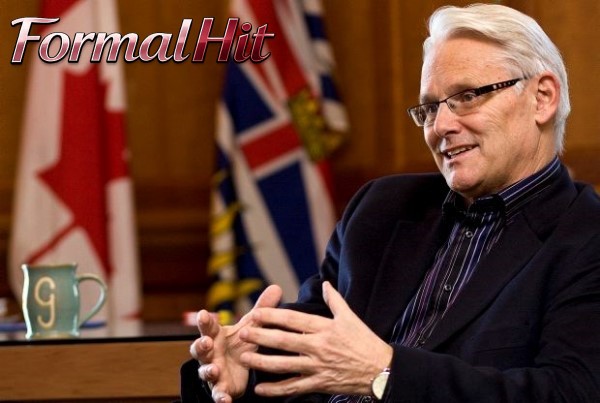
Gordon Campbell is one of Canada’s most consequential political figures a man whose name remains firmly etched in the history of British Columbia’s governance. Whether you admire his market-driven policies or critique his tenure’s controversies, there is no denying the sheer scale of his impact. From the boardrooms of Vancouver to the halls of Westminster, Gordon Campbell’s career has spanned decades and crossed oceans, leaving behind a legacy that still sparks debate and discussion today.
Who Is Gordon Campbell? A Brief Overview
Born on January 12, 1948, in Vancouver, British Columbia, Gordon Muir Campbell grew up in a city that would eventually become the stage for his greatest political achievements. Gordon Campbell studied at Dartmouth College in the United States and later pursued urban planning at UBC, a background that clearly shaped his future focus on economic development and infrastructure. Gordon Campbell’s age now in his late seventies has done little to diminish the weight of his contributions to Canadian public life.
Gordon Campbell is, at his core, a builder. Long before he entered provincial politics, Campbell made his mark as Mayor of Vancouver from 1986 to 1993, where he earned a reputation as a fiscally disciplined, pro-development leader. That tenure set the foundation for everything that followed.
Gordon Campbell’s Career: From City Hall to Province to Palace
Rising Through the Ranks of British Columbia Politics
Gordon Campbell’s career trajectory was nothing short of remarkable. After serving as Vancouver’s mayor, he transitioned into provincial politics, winning the leadership of the BC Liberal Party in 1993. For almost a decade in opposition, he sharpened his policy vision and waited for his moment. That moment came in 2001.
The 2001 BC provincial election delivered a historic landslide. Campbell led the BC Liberals to a stunning 77 out of 79 seats one of the most decisive electoral victories in Canadian provincial history. He served as Premier of British Columbia from 2001 to 2011, a decade during which he overhauled the province’s finances, championed the 2010 Winter Olympics in Vancouver, and pursued aggressive trade and investment policies that dramatically reshaped BC’s economic landscape.
The HST Controversy and Political Downfall
No account of Gordon Campbell’s career is complete without addressing the Harmonized Sales Tax (HST) controversy. In 2009, his government introduced the HST, merging the provincial sales tax with the federal GST a move that triggered enormous public backlash. The anger was not merely about the tax itself but about the perception that Campbell had misled voters. A successful citizen-led recall referendum ultimately forced its reversal, and in November 2010, Campbell resigned as premier, citing the political climate that had made it impossible to govern effectively.
High Commissioner to the United Kingdom
Rather than fade into obscurity after his resignation, Gordon Campbell took on a significant new role. Prime Minister Stephen Harper appointed him as Canada’s High Commissioner to the United Kingdom in 2011, a post he held until 2016. During this period, he represented Canadian interests in London at a critical time including the lead-up to Brexit and engaged in high-level diplomatic work across Europe. This chapter of Gordon Campbell’s career demonstrated that his ambitions and capabilities extended well beyond provincial borders.
Gordon Campbell Age, Height, and Personal Profile
Gordon Campbell’s age is 77 as of 2025, and he carries his years with the quiet authority of someone who has spent a lifetime navigating complex political terrain. In terms of physical presence, Gordon Campbell’s height is reported at approximately 5 feet 10 inches a detail that, while minor, reflects the composed, measured bearing that became something of a personal trademark throughout his political life.
He is known for being disciplined and methodical, qualities that defined not only his political style but also his personal demeanor. Those who worked alongside him frequently describe a man who combined intellectual rigor with a relentless work ethic.
Gordon Campbell’s Personal Life: Spouse and Siblings
Gordon Campbell’s Spouse
Gordon Campbell’s spouse is Nancy Campbell (née Chipperfield), whom he married in 1972. Their marriage became a point of public discussion in 2009 when Campbell was arrested in Hawaii for driving under the influence of alcohol — an incident that both embarrassed him politically and humanized him personally. Through the years, Nancy has maintained a relatively private profile, supporting her husband during both his political highs and personal lows. The couple has three children together and has remained together through decades of public life.
Gordon Campbell’s Siblings
Gordon Campbell’s sibling connections have been less publicized throughout his career. He was born into a family that experienced significant tragedy early on his father died by suicide when Gordon was 13, an event that profoundly shaped his outlook and drive. While Gordon Campbell’s siblings have not sought public attention, his family background clearly played a formative role in his ambition and his determination to build something lasting.
Gordon Campbell’s Net Worth
Estimating Gordon Campbell’s net worth is not straightforward, given that much of his financial profile remains private. However, based on his long career in public service including a decade as Premier and five years as High Commissioner combined with board roles and advisory work in the private sector after leaving government, estimates place Gordon Campbell’s net worth in the range of $5 million to $10 million CAD. His investments in Vancouver real estate during his earlier career years also likely contributed to his overall financial standing. It is worth noting that these are estimates, as no official disclosure exists in the public domain.
Gordon Campbell’s Recent Activities
Life After Government
Gordon Campbell’s recent activities have been characteristically low-key but substantive. After concluding his role as High Commissioner in 2016, he largely stepped back from the public spotlight. He has participated in select speaking engagements and has occasionally weighed in on Canadian policy debates, particularly around resource development and trade areas where he holds deep expertise. Additionally, he has been involved in business advisory capacities, lending his governance experience to organizations navigating complex regulatory environments.
Views on Contemporary BC Politics
Interestingly, Gordon Campbell’s recent activities include rare public commentary on British Columbia’s ongoing political evolution. He has expressed concern about the direction of housing policy and infrastructure investment, two areas central to his legacy as both mayor and premier. His perspective, shaped by decades of firsthand experience, carries weight in policy circles even if he no longer holds formal office.
What Gordon Campbell’s Legacy Tells Us
Gordon Campbell’s legacy is neither simple nor easily summarized. He was a leader who built stadiums, balanced budgets, and opened trade corridors and also a leader who overreached on tax policy and paid the political price. That complexity is precisely what makes him a fascinating figure. His career reflects the tension at the heart of modern governance: the desire to make bold, transformative decisions in a democratic system that demands constant accountability.
Furthermore, his post-premiership role as a diplomat showed a dimension many politicians never get to explore. He transitioned from the raw combativeness of provincial politics to the nuanced world of international relations with surprising ease a testament to his adaptability.
Final Thoughts
Gordon Campbell remains a towering figure in Canadian political history. His decade as premier left a visible imprint on British Columbia’s economy, infrastructure, and global reputation. His story complete with its triumphs, controversies, and personal struggles is a deeply human one. Understanding Gordon Campbell means understanding not just one man’s career, but the shifting forces that have defined western Canadian politics over the last four decades. He is, in every meaningful sense, a man worth knowing about.


